
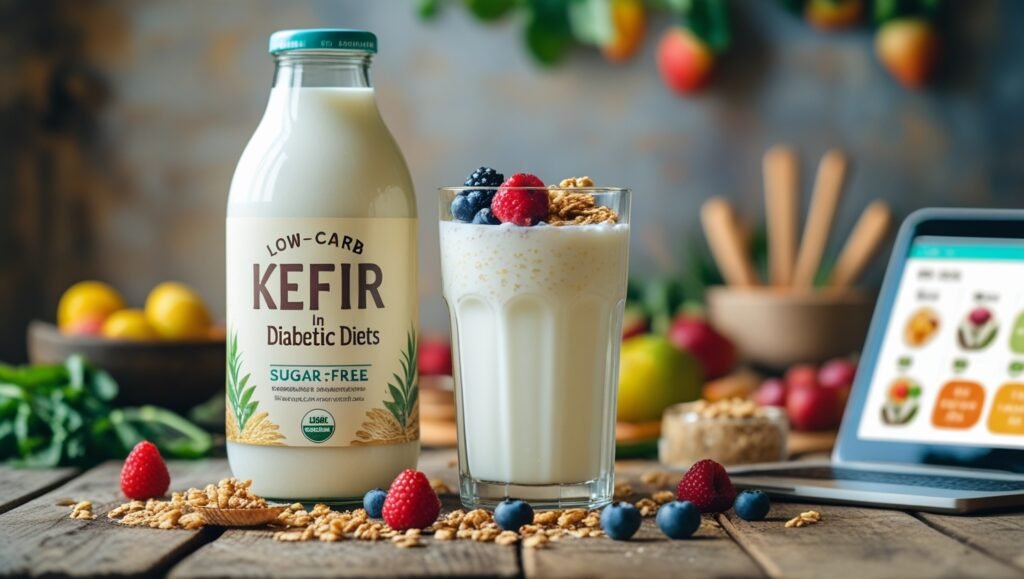
Kefir in Diabetic Diets – Choosing Low-Carb Kefir and Sugar-Free Fermentation for Blood Sugar Control
Ramesh, a 52-year-old businessman from Mumbai, was diagnosed with type 2 diabetes two years ago. His doctor recommended avoiding sugary beverages, but Ramesh missed the tangy and refreshing drinks he used to enjoy.
One day, his cousin introduced him to homemade sugar-free kefir. After a month of drinking it regularly, Ramesh noticed not only better digestion but also more stable blood sugar readings on his glucometer. That small shift in his diet became a big part of his diabetes management plan.
Why Kefir Can Be a Good Choice for Diabetics?
Kefir is a fermented milk (or non-dairy) drink that’s rich in probiotics—beneficial bacteria and yeasts that improve gut health. For diabetics, gut health plays a role in insulin sensitivity and glucose metabolism.
Research suggests:
-
Probiotic-rich foods like kefir can help improve HbA1c (average blood sugar) in type 2 diabetics [Source 1].
-
In one study, participants with type 2 diabetes who consumed kefir daily saw a 16% drop in fasting blood glucose after 8 weeks [Source 2].
The Problem with Store-Bought Kefir
While kefir itself is healthy, commercial kefir often contains added sugars—sometimes up to 20–25g per serving—which can spike blood sugar.
In contrast, properly fermented homemade kefir can have as little as 1–2g of sugar per serving, depending on fermentation time.
How to Make Low-Carb, Sugar-Free Kefir?
Follow this simple process to keep your kefir diabetic-friendly:
You’ll Need:
-
Milk or non-dairy milk (unsweetened almond, coconut, or oat milk for plant-based)
-
Kefir grains (milk or water kefir grains)
-
Glass jar
-
Plastic or wooden spoon
-
Strainer (plastic)
Steps:
-
Add kefir grains to milk – Ratio: 1 tbsp grains per 250ml milk.
-
Ferment at room temperature (20–25°C) for 24–48 hours.
-
Taste test after 24 hours – The longer it ferments, the lower the sugar.
-
Strain grains – Use a plastic strainer to separate kefir grains from the liquid.
-
Refrigerate and enjoy – You can add cinnamon or vanilla extract for flavor without sugar.
Perks of Low-Carb, Sugar-Free Kefir
| Benefit | Why It Matters |
|---|---|
| Fasting glucose reduction | Clinically shown drop of ~10 mg/dL supports tighter control (PubMed). |
| Lowered insulin levels | May enhance insulin sensitivity and reduce pancreatic burden (PubMed). |
| Anti-inflammatory and gut support | Reduced IL-6, TNF; boosted IL-10; healthier microbiome (MDPI). |
| Improved cellular glucose uptake | Activates GLUT4 via PI3-K pathway—acts like a natural “insulin assistant” (ResearchGate). |
| Satiety & metabolism edge | GLP-1 and butyrate boost may curb appetite and support insulin-producing cells (MDPI). |
Pro Tips for Sugar-Free Fermentation
-
Double fermentation (leaving the strained kefir for another 12–24 hours at room temperature) further reduces sugar.
-
Ferment longer if you want lower lactose (milk sugar) content.
-
Water kefir can be made with minimal sugar in the initial brew—most of it gets consumed by the microbes during fermentation.
Benefits of Low-Carb Kefir for Diabetics
-
Supports blood sugar control – Probiotics may improve insulin sensitivity.
-
Improves digestion – Helps with nutrient absorption and gut balance.
-
Boosts immunity – 70% of your immune system is in the gut.
-
Reduces inflammation – Chronic inflammation can worsen diabetes.
-
Provides nutrients – Rich in calcium, magnesium, and vitamin K2 for bone and heart health.
What Most Blogs Don’t Mention and Miss the Sweet Spot?
-
Fermentation length is key: Sugar content drops sharply after 24–36 hours.
-
Grain-to-milk ratio matters: More grains = faster fermentation = less sugar.
-
pH monitoring: Target a pH of 4.2 or lower for maximum probiotic activity and low sugar.
-
Temperature affects sugar reduction: Warmer temperatures speed up fermentation but may require more frequent feeding of grains.
-
Insulin Surprises: Many write about kefir’s low glycemic index (GI: 12–30), but few address the insulin index—the insulin response kefir actually triggers. Kefir, like other dairy products, can prompt high insulin levels despite a low carbohydrate load dr.lib.iastate.eduTaylor & Francis Online. This dual nature—low GI but high insulin output—might actually be beneficial, helping glucose clear more efficiently without spiking blood sugar.
-
Kefir’s Anti-Inflammatory Power: Beyond lowering glucose, plain kefir has been shown to reduce pro-inflammatory cytokines like IL-1, IL-6, and TNF, while boosting anti-inflammatory IL-10—a triple win for metabolic and gut health MDPI.
-
Muscle-Level Action: It doesn’t just sit in the gut. Kefir enhances glucose uptake into muscle cells by activating GLUT4 and PI3-K pathways—key players in insulin signaling and glucose management ResearchGate.
-
Microbiome & Hormone Boost: Some strains found in kefir (like Lactobacillus mali APS1) lower blood glucose and HOMA-IR in mice while increasing GLP-1 and butyrate—linking kefir to appetite control, better glycemic stability, and gut health MDPI.
Stats to Remember
-
A 200ml cup of 24-hour fermented milk kefir may contain ~6–8g sugar.
-
A 48-hour fermented kefir can drop to 1–2g sugar [Source 3].
-
Probiotics in kefir can increase GLUT-4 expression in cells, helping them absorb glucose more effectively [Source 4].
Final Scoop: How to Sip Wisely
-
Choose plain, low-carb kefir—skip flavored kinds with added sugars.
-
Limit to ~150–200 mL/day, especially if consuming high volumes hasn’t been part of your diet.
-
Pair with fiber or healthy fats (like a chia seed pudding) to smooth blood-glucose spikes.
-
Track effects—monitor fasting glucose and HbA1c over a few weeks; even small HbA1c shifts can mean big health dividends.
-
Rotate or rotate—alternate kefir types (milk-based vs. water-based) to diversify probiotic exposure and minimize lactose concerns.
What the Numbers Say
-
Fast Facts from Clinical Trials:
-
In a meta-analysis of six randomized trials (n = 323), kefir lowered fasting blood sugar by ~10 mg/dL (WMD = –10.28; 95% CI: –16.53 to –4.02; P = 0.001) and significantly reduced insulin (P < 0.00001), though change in HbA1c was not statistically significant (–0.64%; P = 0.08) PubMed.
-
In another 8-week RCT (n = 60), daily intake of 600 mL probiotic kefir dropped fasting glucose from 161.6 ± 57.7 mg/dL to 139.2 ± 46.7 mg/dL (P < 0.05) MDPI.
-
A 90-day case saw HbA1c fall from 7.9% to 7.1% in a patient with long-standing uncontrolled diabetes—plus a 4-kg weight loss MDPI.
-
Bottom Line
For diabetics, kefir can be a safe, tasty, and gut-friendly drink—but only if fermented at home with the right technique to minimize sugar. By controlling fermentation time and avoiding added sweeteners, you can enjoy kefir without worrying about blood sugar spikes.
Don’t purchase kefir drink from market, because they are using chemicals and preservatives to increase shelf life—just like soft drinks—which are not good for your body. If you want a healthy kefir drink, you must make it at home. For that, you can purchase pure organic milk and water kefir grains from us—with free shipping and the lowest price.
Order Now
📦 Order 100% organic kefir grains with free shipping all over India:
🌐 www.jpsayurvedicpharmacy.com
📱 WhatsApp: +91-9877194003 | +91-9646088764
📢 Follow us:
Related Reads:
- How to Ferment, Maintain, and Store Milk Kefir Grains?
- How to Make Coconut Water Kefir at Home?
- How to Add Flavour to Water Kefir?
- Gut-Brain Connection & Kefir?
- Which Kefir is Best for Diabetic Patients? Milk Kefir or Water Kefir?
- Kefir vs. Yogurt: Which One Is Better for Gut Health?
- How to Make Plant Based Milk Kefir (Coconut, Almond & Oat Milk Guide)
- How Kefir Helps in Weight Loss and Boosting Metabolism Naturally [Daily Use Guide]
- Is Milk Kefir Good for Your Skin Health?
- Kefir in Ayurveda: How to Use This Probiotic for Digestion, Immunity & Holistic Healing
- Raw Milk Kefir vs. Pasteurized Milk Kefir→ Nutritional differences and safety debates.
- Homemade vs Store Bought Milk Kefir: Why More People Are Choosing to Ferment at Home
