
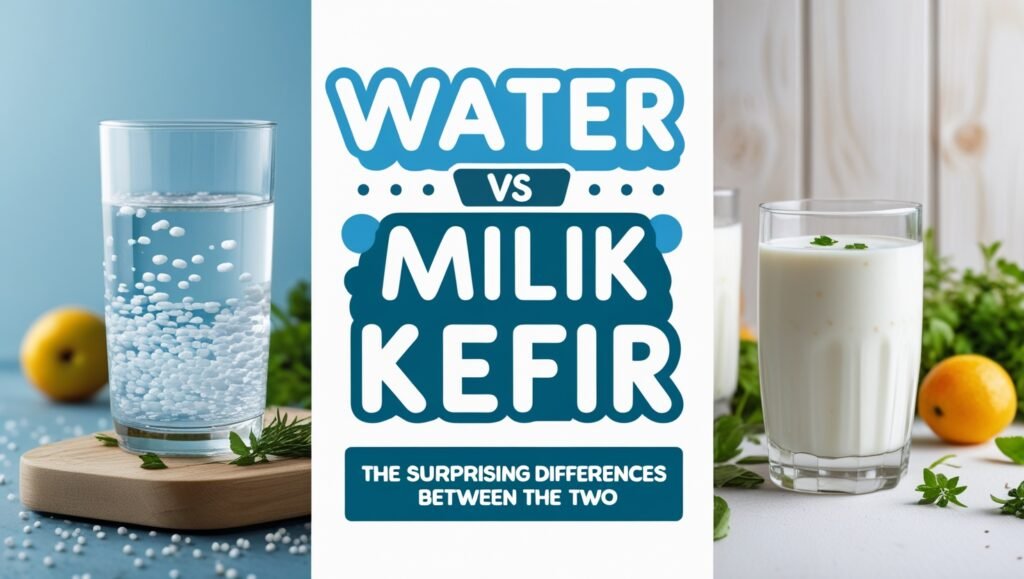
Water Kefir vs Milk Kefir – The Complete Guide with Surprising Differences -Kindly explain me what is the difference between water kefir and milk kefir?
Discover the key differences between water kefir vs milk kefir, from probiotic strains to sugar content. Includes science-backed benefits and tips.
Introduction – A Tale of Two Kefirs
Last summer, I met Maria, a home fermenter from Barcelona, at a local food fair. She was handing out two tiny cups—one slightly creamy, the other sparkling and citrusy. “Both are kefir,” she smiled. I was puzzled. I’d only ever heard of the yogurt-like drink made from milk. But here was water kefir, a fizzy, fruit-infused probiotic brew.
That afternoon, Maria told me what most blogs skip—water kefir and milk kefir may share a name, but they’re like cousins who grew up in different households. The way they’re cultured, the probiotics they provide, and even their uses in diets vary far more than most people realize.
Let’s break it down in detail, backed by science and some little-known fermentation facts.

1. The Basic Difference – Culture Medium
-
Milk Kefir is made by fermenting dairy milk (cow, goat, sheep, or plant-based alternatives) with milk kefir grains.
-
Water Kefir is made by fermenting a sugar-water solution (often with fruit or molasses) using water kefir grains.
Both use “grains,” but these are not cereal grains—they’re symbiotic colonies of bacteria and yeast (SCOBY). However, their microbial makeup is very different.
2. Probiotic Strain Differences
According to a 2021 study in Frontiers in Microbiology, milk kefir can contain over 30–50 different probiotic strains, including Lactobacillus kefiranofaciens, Lactococcus lactis, and Bifidobacterium species. These are known for supporting gut lining repair and lactose digestion.
Water kefir, on the other hand, typically has 10–15 strains, such as Lactobacillus hilgardii, Leuconostoc mesenteroides, and various yeasts like Saccharomyces cerevisiae, which can promote digestive enzyme production and mild detox effects.
Little-known fact: Some yeast species in water kefir are not found in milk kefir, giving it natural carbonation and a different metabolic profile.
3. Nutritional Profile Comparison
| Nutrient / Aspect | Milk Kefir (per 1 cup) | Water Kefir (per 1 cup) |
|---|---|---|
| Calories | ~100–150 | ~20–40 |
| Sugar Content | ~8–12g (naturally in milk) | ~3–6g (fermentation reduces added sugar) |
| Protein | ~8g | <1g |
| Fat | ~3–8g | 0g |
| Probiotic Diversity | High | Moderate |
| Lactose | Low (fermented out) | None |
4. Taste & Texture
-
Milk Kefir: Creamy, tangy, similar to drinkable yogurt.
-
Water Kefir: Light, fizzy, sweet-tart, often flavored with fruits, herbs, or spices.
5. Benefits of Each
Milk Kefir Benefits:
-
High protein for muscle repair (Sports Medicine, 2020)
-
Rich in calcium & vitamin K2 for bone health
-
Contains kefiran, a unique polysaccharide linked to immune regulation
Water Kefir Benefits:
-
Dairy-free, vegan-friendly
-
Lower calorie & sugar content than many sodas
-
Easier for people with sensitive digestion due to lighter probiotic load
6. Which One Should You Choose?
Choose milk kefir if:
-
You want a nutrient-dense probiotic with protein and minerals.
-
You’re looking to improve lactose digestion.
-
You want more probiotic diversity for gut lining repair.
Choose water kefir if:
-
You’re vegan, lactose-intolerant, or allergic to dairy.
-
You prefer a lighter, fizzy drink.
-
You want a low-calorie probiotic beverage alternative to soda.
Pro Tip – You Can Drink Both
Some nutritionists recommend alternating between the two to benefit from different strains of probiotics and nutrient profiles.
Don’t purchase kefir drinks from the market. Most commercial versions contain preservatives and additives to extend shelf life—similar to sodas. For a clean, effective probiotic experience, make kefir at home using pure organic grains. Order from JPS Ayurvedic Pharmacy for free shipping and the lowest price across India.
Want to Start Your Kefir Journey?
Get Fresh, High-Quality Organic Milk Kefir and Water Kefir Grains from
👉 JPS Ayurvedic Pharmacy – Free shipping all over India!
📱 WhatsApp: +91-9877194003 | +91-9646088764
📢 Follow us:
Related Posts:
- How to Ferment, Maintain, and Store Milk Kefir Grains?
- How to Make Coconut Water Kefir at Home?
- How to Add Flavour to Water Kefir?
- Gut-Brain Connection & Kefir?
- Which Kefir is Best for Diabetic Patients? Milk Kefir or Water Kefir?
- Kefir vs. Yogurt: Which One Is Better for Gut Health?
- How to Make Plant Based Milk Kefir (Coconut, Almond & Oat Milk Guide)
- How Kefir Helps in Weight Loss and Boosting Metabolism Naturally [Daily Use Guide]
- Is Milk Kefir Good for Your Skin Health?
- Kefir in Ayurveda: How to Use This Probiotic for Digestion, Immunity & Holistic Healing
- Raw Milk Kefir vs Pasteurized Milk Kefir – Which is Better?
- Kefir for Diabetics Diets: Low-Carb & Sugar-Free Fermentation for Blood Sugar Control
- Kefir for Kids and Babies (Is it Safe?) – Safety, Benefits & How to Introduce It
Final Takeaway
While they share a name, water kefir and milk kefir are fundamentally different fermented drinks with unique benefits. Whether you prefer creamy or fizzy, dairy or plant-based, both can help diversify your gut microbiome—and Maria would probably tell you to keep both in your fridge.
