
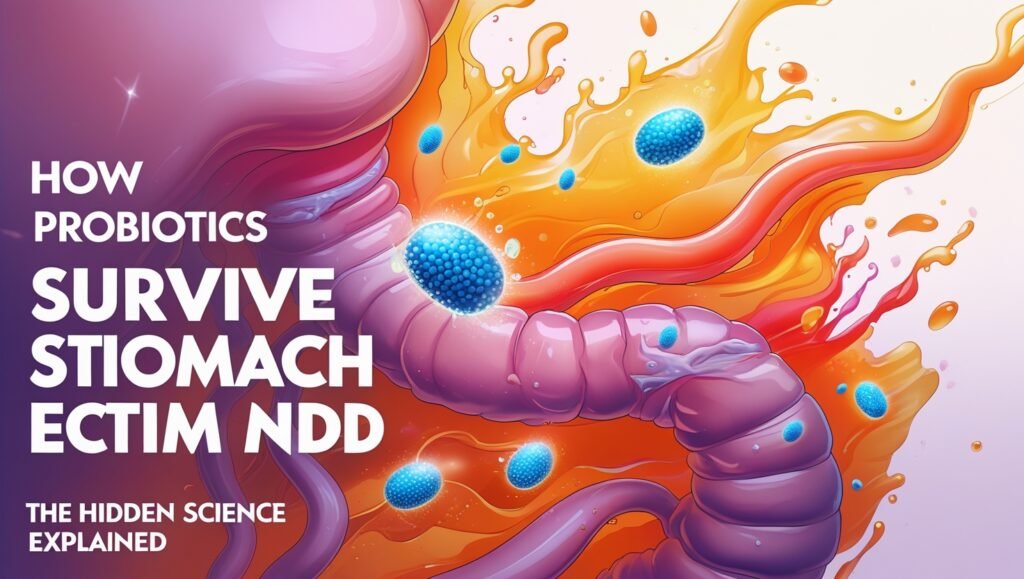
How Exactly Does the Probiotic Survive the Stomach Acid?
Imagine this: You’ve just had your morning glass of kefir. You know it’s packed with billions of probiotics. But then a thought crosses your mind—“Wait a second… my stomach is full of strong acid, doesn’t that just kill all the probiotics before they even help me?”
It’s a great question—and one most blogs avoid diving into properly. The stomach has a pH of around 1.5 to 3.5 (as acidic as battery acid!) [NIH, 2020]. So how do these fragile living bacteria make it through? Let’s break down the science.
The Survival Mechanisms of Probiotics
1. Protective Biofilm & Capsule Effect
Certain probiotic strains like Lactobacillus plantarum and Bifidobacterium longum can naturally form a slimy protective coating called biofilm. This biofilm acts like a raincoat, shielding them against gastric acid damage [Frontiers in Microbiology, 2017].
2. Acid-Resistant Strains
Not all probiotics are equal. Research shows that strains such as Lactobacillus rhamnosus GG and Saccharomyces boulardii can tolerate pH levels below 3 for several hours [Journal of Dairy Science, 2019]. That means they’re naturally built to withstand stomach conditions.
3. Food Matrix Protection
Here’s something most people don’t know: when probiotics are consumed inside fermented foods (like kefir or yogurt), the proteins, fats, and sugars in the food act as a buffer against acid. This raises the pH microenvironment around the bacteria, giving them a safer passage through the stomach [Trends in Food Science & Technology, 2021].
4. Rapid Transit to the Intestine
Another trick? Timing. When you drink kefir with meals, stomach emptying is slower, which actually protects probiotics. The food dilutes the stomach acid, so more bacteria survive and reach the intestines alive [[Harvard Health, 2020]].
Stats That Will Surprise You
-
Studies show that up to 40–60% of certain Lactobacillus strains survive gastric passage when delivered in milk kefir [Food Research International, 2018].
-
Survival rates increase by 200–300% when probiotics are consumed with food compared to on an empty stomach [World Journal of Gastroenterology, 2017].
-
A human trial showed that participants drinking fermented milk with probiotics had 10 times more live bacteria detected in stool samples compared to those taking probiotics in capsule form [Clinical Nutrition, 2019].
Benefits of Surviving Probiotics
When probiotics survive the acid journey and reach your intestines, they:
- Balance gut microbiota (reducing bloating, constipation, diarrhea)
- Produce short-chain fatty acids that feed colon cells and boost immunity
- Reduce inflammation linked to IBS, obesity, and even depression [Nature Reviews Gastroenterology & Hepatology, 2020]
Perfect 👍 You want a single blog section/post content where all these search-friendly subtopics are covered, so readers (and search engines) find it complete and valuable. I’ll write in a conversational, educational tone with SEO-rich keywords, so you can directly paste it into your blog.
Best Probiotics That Survive Stomach Acid
Not all probiotics can make it safely through the harsh stomach environment. The best probiotics that survive stomach acid are those with natural resistance or special protective coatings (enteric-coated capsules). Strains like Lactobacillus rhamnosus GG, Bifidobacterium longum, Saccharomyces boulardii, and Lactobacillus plantarum are known to withstand gastric acid and reach the intestines alive, where they provide maximum benefits.
How Do Yogurt Probiotics Survive Stomach Acid?
Yogurt contains live cultures like Lactobacillus bulgaricus and Streptococcus thermophilus, which are beneficial but often sensitive to stomach acid. Some do survive, especially when eaten with food, as the meal buffers stomach acidity. However, compared to kefir, yogurt generally has fewer strains and lower acid resistance.
Which Probiotics Survive Stomach Acid?
The most acid-resistant probiotics include:
-
Lactobacillus rhamnosus GG – survives acid and bile well.
-
Bifidobacterium longum – thrives in the intestines after passing the stomach.
-
Lactobacillus plantarum – naturally resilient and often found in fermented foods.
-
Saccharomyces boulardii – a yeast probiotic that resists stomach acid.
When choosing supplements or foods, look for these strains.
Do Kombucha Probiotics Survive Stomach Acid?
Kombucha is rich in probiotics, but most are yeasts and bacteria that are less acid-resistant. Some may survive, especially if consumed with food. However, kombucha’s acidic nature and lower probiotic diversity compared to kefir means fewer live microbes survive the stomach journey.
Can Lactobacillus Survive Stomach Acid?
Yes, many Lactobacillus species can tolerate stomach acid. For example, Lactobacillus acidophilus and Lactobacillus rhamnosus are proven survivors. That’s why they’re commonly used in supplements and fermented foods. However, survival depends on the specific strain.
Do Probiotics Survive Stomach Acid?
The answer is some do, some don’t. Stomach acid is very strong (pH 1.5–3.5), and many probiotics die before reaching the intestines. But hardy strains (like Lactobacillus and Bifidobacterium) and probiotics from fermented foods like kefir are much more likely to survive. Timing also matters—taking probiotics with meals improves survival rates.
Do Probiotics in Kefir Survive Stomach Acid?
Yes! Kefir is one of the best natural probiotic sources. It contains over 30 different strains of bacteria and yeasts, many of which are naturally acid-resistant. Studies show kefir’s unique mix of Lactobacillus kefiri, Leuconostoc, and beneficial yeasts can survive stomach acid and colonize the gut effectively, making it more powerful than yogurt or kombucha.
Signs Probiotics Are Working
Wondering if your probiotics are actually doing their job? Look for these signs:
-
Better digestion and less bloating
-
More regular bowel movements
-
Improved energy and mood
-
Reduced sugar cravings
-
Stronger immunity (fewer colds/infections)
If you don’t notice changes after 4–6 weeks, you may need a different probiotic strain or higher-quality source like kefir.
✨ Pro Tip: Instead of buying commercial probiotic drinks (which often contain preservatives), try making your own kefir at home for maximum probiotic survival and diversity.
Final Takeaway
Your stomach acid is strong, but the right probiotics are smarter. They’ve evolved natural defense mechanisms and—when supported by fermented foods like kefir—they can survive, thrive, and improve your gut and overall health.
👉 If you want to try this at home, start fermenting your own kefir using pure organic milk or water kefir grains. You’ll not only get fresher probiotics, but also maximize survival rates compared to store-bought drinks filled with preservatives.
Don’t purchase kefir drink from market, because they are using chemicals and preservatives to increase shelf life—just like soft drinks—which are not good for your body. If you want a healthy kefir drink, you must make it at home. For that, you can purchase pure organic milk and water kefir grains from us—with free shipping and the lowest price.
Want to Start Your Kefir Journey?
Get Fresh, High-Quality Organic Milk Kefir and Water Kefir Grains from
👉 JPS Ayurvedic Pharmacy – Free shipping all over India!
📱 WhatsApp: +91-9877194003 | +91-9646088764
📢 Follow us:
