
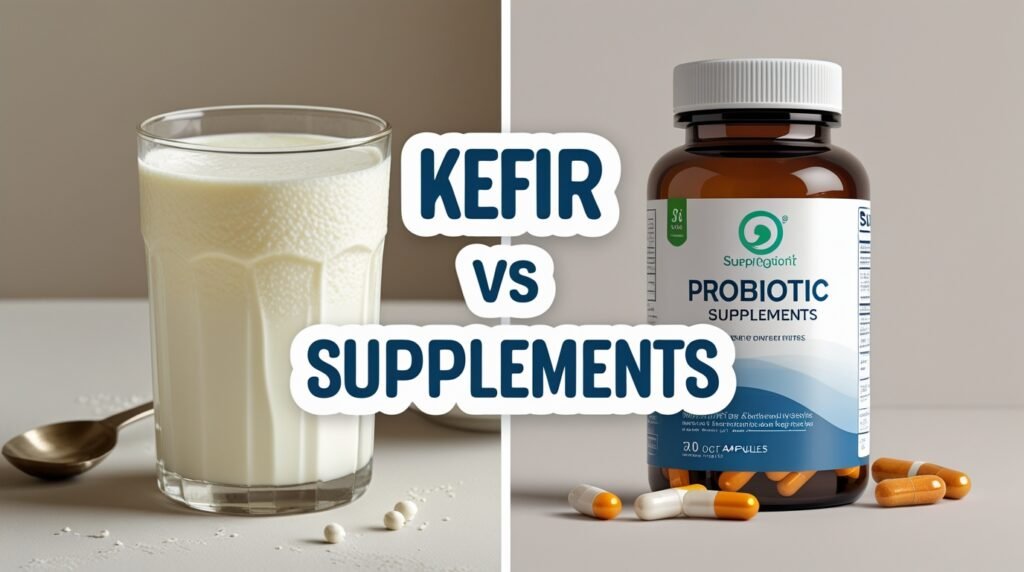
Kefir vs Probiotic Supplements – Is Kefir a Better Probiotic Source Than Supplements?
Discover whether kefir truly beats probiotic capsules. Learn from science-backed facts, unique stats, and surprising gut health insights most blogs skip.
A Gut Lesson from a Traveler When Rohan, a software engineer from Delhi, took a business trip to Turkey, he noticed something strange:
locals rarely spoke about “gut issues” or “bloating.” They drank a tangy, fizzy milk drink called kefir every morning.
Back home, Rohan was already spending ₹2,000 a month on probiotic supplements from health stores — capsules that promised “10 billion CFUs” and better digestion.
Out of curiosity, he tried homemade kefir for just a week. Within days, his digestion improved, and his bloating vanished — but what surprised him most wasn’t just how he felt, it was how alive his gut felt.
Was kefir actually better than his expensive probiotic capsules? Let’s dive into what science says.
1. Kefir Is a Living Ecosystem, Not a Single Strain
Most probiotic supplements contain 1–15 isolated strains (such as Lactobacillus acidophilus or Bifidobacterium bifidum) in a freeze-dried form.
Kefir, on the other hand, contains 30–50 living strains of bacteria and yeasts that coexist symbiotically — forming what researchers call a “microbial consortium”【Source: Frontiers in Microbiology, 2022】.
Fun Fact:
A typical kefir drink can deliver up to 1 trillion CFUs per cup — almost 100× more than many probiotic capsules.
That’s like comparing a single musical instrument (a supplement) to a full orchestra (kefir).
2. Kefir’s Diversity Builds Resilience in Your Gut
Probiotic supplements are usually monocultures — they populate your gut temporarily.
Studies show that many capsule-based probiotics leave the system within 3–5 days if you stop consuming them【Harvard Health, 2021】.
Kefir, however, includes yeasts, lactic acid bacteria, and acetic acid bacteria, creating an acidic environment that supports colonization and long-term gut microbiome balance【Source: Nutrients Journal, 2021】.
Think of kefir as planting a forest in your gut, not just throwing a seed.
3. Kefir Contains Prebiotics, Postbiotics, and Bioactive Peptides
Most blogs stop at “probiotics,” but kefir goes further:
-
Prebiotics – Natural sugars (lactose, fructans) feed beneficial bacteria.
-
Postbiotics – Kefiran (a natural polysaccharide) helps reduce inflammation and boost gut barrier strength【Food Microbiology, 2020】.
-
Bioactive Peptides – Studies show kefir peptides can lower blood pressure and improve mood by interacting with GABA receptors in the brain【Frontiers in Pharmacology, 2022】.
These additional compounds are absent in most probiotic supplements, which often contain only bacteria, not the beneficial metabolites they produce.
4. Real-Life Effectiveness: What Studies Say
| Aspect | Kefir | Probiotic Supplements |
|---|---|---|
| Strain Variety | 30–50 | 1–15 |
| CFU per Serving | ~1 trillion | 1–50 billion |
| Gut Colonization | Long-term | Temporary |
| Contains Pre/Postbiotics | ✅ Yes | ❌ No |
| Natural Enzymes (Lactase) | ✅ Yes (helps lactose digestion) | ❌ No |
| Shelf Life | 7–14 days (fresh) | 1–2 years (freeze-dried) |
A 2022 clinical review published in Frontiers in Nutrition found kefir consumption significantly reduced gut inflammation and improved microbial diversity compared to commercial probiotic capsules.
5. Kefir Benefits That Go Beyond Gut Health
Here are unique kefir benefits that even high-end probiotic supplements can’t replicate:
1. Improved Nutrient Absorption
Kefir’s enzymes help digest lactose and improve absorption of calcium, magnesium, and B-vitamins.
2. Enhanced Immunity
Kefiran polysaccharide in kefir stimulates immune cells like macrophages and increases IgA antibody levels【Journal of Dairy Science, 2021】.
3. Mental Health Connection
Regular kefir intake improves mood and sleep quality via the gut-brain axis by modulating neurotransmitters like serotonin and GABA.
4. Antifungal & Antibacterial Properties
Kefir’s natural yeasts produce organic acids that inhibit pathogens like Candida albicans and E. coli.
5. Affordable & Sustainable
A one-time purchase of kefir grains (₹499–₹999) can make unlimited probiotic drinks for life, compared to recurring capsule purchases.
6. When Supplements Might Still Be Useful
To be fair, probiotic supplements are still valuable when:
-
You’re on antibiotics (they target specific strains like Saccharomyces boulardii).
-
You have specific gut disorders where strain precision matters.
-
You travel frequently and can’t store live cultures like kefir.
But for general gut wellness, kefir is the superior, natural choice — broader, stronger, and more adaptable to your microbiome.
Also Read:
Final Verdict
Kefir isn’t just a probiotic — it’s a complete microbial ecosystem that nourishes, repairs, and sustains your gut health naturally.
Supplements can support, but kefir transforms.
So, next time you reach for a capsule, remember: your body might prefer a sip of something alive.
Don’t purchase kefir drink from market, because they are using chemicals and preservatives to increase shelf life—just like soft drinks—which are not good for your body.
If you want a healthy kefir drink, you must make it at home. For that, you can purchase pure organic Milk Kefir Grains and Water Kefir Grains from us—with free shipping and the lowest price at JPS Ayurvedic Pharmacy
Want to Start Your Kefir Journey?
Order fresh organic milk and water kefir grains from
👉 JPS Ayurvedic Pharmacy
📦 Free shipping all over India
📱 WhatsApp: +91-9877194003 | +91-9646088764
Follow us on WhatsApp Channel
