
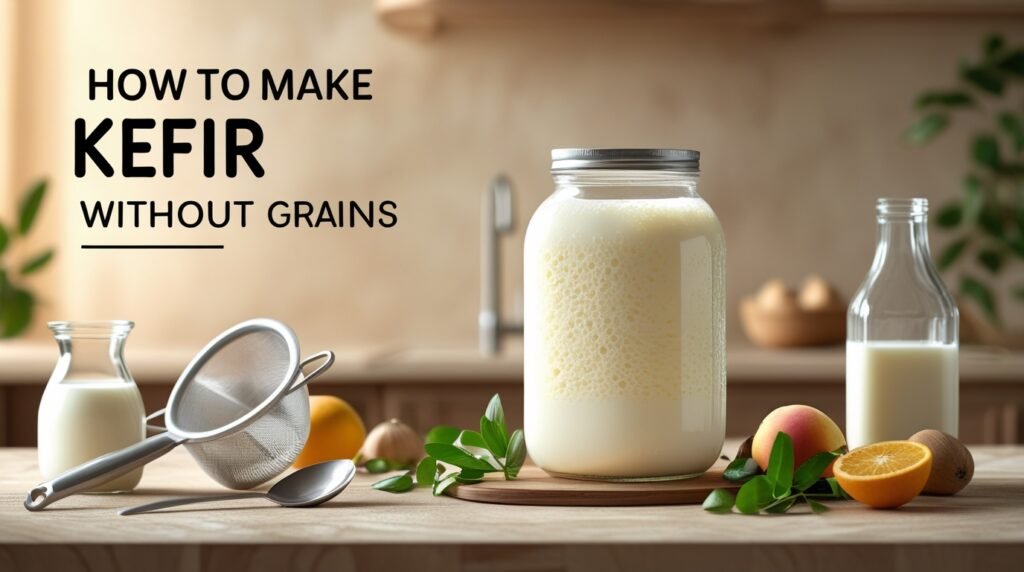
How to Make Kefir Without Grains (Easy Starter Culture Method)
Learn how to make kefir without grains using powder or natural starter cultures. Discover the secret science, fermentation tips, and hidden benefits most blogs don’t share.
When Anjali moved to a remote Himalayan village during lockdown, she missed her daily kefir drink—the tangy, probiotic beverage that kept her digestion happy. With no access to kefir grains, she wondered if her gut health journey was over.
But then, she learned a secret: you don’t need grains to make kefir. You can craft the same probiotic magic using natural starter cultures or even a little kefir from a previous batch.
If you’ve ever struggled to find live grains or want an easier, low-maintenance option, this guide will teach you exactly how to make kefir without grains, safely and scientifically.
The Science Behind Kefir Without Grains
Traditional kefir grains are living colonies of Lactobacillus, Leuconostoc, Acetobacter, and yeasts that create lactic acid, carbon dioxide, and trace alcohol during fermentation.
But when you don’t have grains, you can mimic this process using direct-set starter cultures (also called kefir powder starters).
Unlike grains, powder starters contain freeze-dried strains of beneficial bacteria and yeasts—often the same species found in authentic kefir grains, such as Lactobacillus kefiri and Saccharomyces cerevisiae.
According to a 2022 review in Frontiers in Microbiology, both traditional and non-grain kefir can deliver over 30 types of probiotics, supporting gut diversity and immune health—though live grains tend to contain more yeast variety (source: Frontiers in Microbiology, 2022).
What You’ll Need
- 1 liter (4 cups) of milk — cow, goat, or plant-based (if non-dairy, add a small sugar source like date or coconut water)
- 1 sachet of kefir starter culture (available online)
- 1 clean glass jar
- A wooden or plastic spoon
- A breathable cloth or paper towel and rubber band
Pro Tip: Avoid metal spoons or lids—they can interfere with live bacteria.
Step-by-Step: How to Make Kefir Without Grains
Step 1: Prepare the Milk
Warm the milk slightly (about 35–40°C / 95–104°F). Don’t boil—it should feel warm to touch, not hot.
This helps activate the bacteria in your starter culture.
Step 2: Add the Starter
Sprinkle your kefir starter culture over the milk and stir gently with a plastic or wooden spoon.
Make sure it’s evenly mixed.
Step 3: Cover and Ferment
Cover the jar with a breathable cloth and secure it with a rubber band.
Let it ferment at room temperature (20–25°C / 68–77°F) for 18–24 hours.
Fun fact: The longer the fermentation, the tangier and thicker your kefir will become.
Step 4: Check Consistency
After about 18–24 hours, the milk will thicken and separate slightly. Stir it gently—if it smells pleasantly sour (like yogurt), it’s ready.
Step 5: Chill and Store
Once fermented, refrigerate your kefir. Cold temperatures slow down fermentation, keeping the flavor mild and fresh.
Step 6: Reuse for Next Batch
Save about 3 tablespoons of this kefir as a natural starter for your next batch.
You can typically reuse it 3–5 times before needing a new sachet.
Hidden Benefits Most Blogs Don’t Mention
-
Low Maintenance:
Unlike live grains that require daily feeding and rinsing, starter cultures can be stored in the fridge and used whenever needed. -
Consistent Flavor:
Each batch tastes uniform—great for beginners who struggle with the tangy unpredictability of live grains. -
Shelf Stable:
Powder starters can last up to 12–18 months, making them ideal for travel or areas where fresh grains are hard to find. -
Reduced Lactose Content:
Non-grain kefir still contains active Lactobacillus that break down milk sugar (lactose). Research shows kefir can reduce lactose levels by 30–50%, making it suitable for mildly lactose-intolerant people (Journal of Dairy Science, 2021). -
Gut Health and Immunity Boost:
Regular consumption of kefir (grain or non-grain) has been shown to improve gut microbiota diversity, reduce inflammation markers, and enhance nutrient absorption (Frontiers in Nutrition, 2023).
Grains vs. Grain-Free Kefir: Quick Comparison
| Feature | With Grains | Without Grains |
|---|---|---|
| Ease of Use | Needs daily care | Very easy |
| Probiotic Variety | Higher (40+ strains) | Moderate (20–30 strains) |
| Flavor | Tangier, yeasty | Milder, creamy |
| Shelf Life | Must be kept alive | Long-lasting powder |
| Ideal For | Fermentation enthusiasts | Beginners & busy people |
Final Thoughts
If you can’t find kefir grains—or simply want a more convenient approach—grain-free kefir made with starter culture is a smart alternative.
It delivers most of the same probiotics, supports gut health, and helps you enjoy the daily benefits of kefir without the maintenance of live grains.
So whether you’re in a mountain village like Anjali or just starting your probiotic journey, this method lets you make kefir your own way—simple, sustainable, and science-backed.
Also Read:
Call to Action
Don’t purchase kefir drink from the market, because they use chemicals and preservatives to increase shelf life—just like soft drinks—which are not good for your body.
If you want a healthy kefir drink, you must make it at home.
👉 Order pure organic Milk Kefir Grains and Water Kefir Grains from JPS Ayurvedic Pharmacy with free shipping all over India.
📱 WhatsApp: +91-9877194003 | +91-9646088764
📢 Follow our WhatsApp Channel: Click Here
