
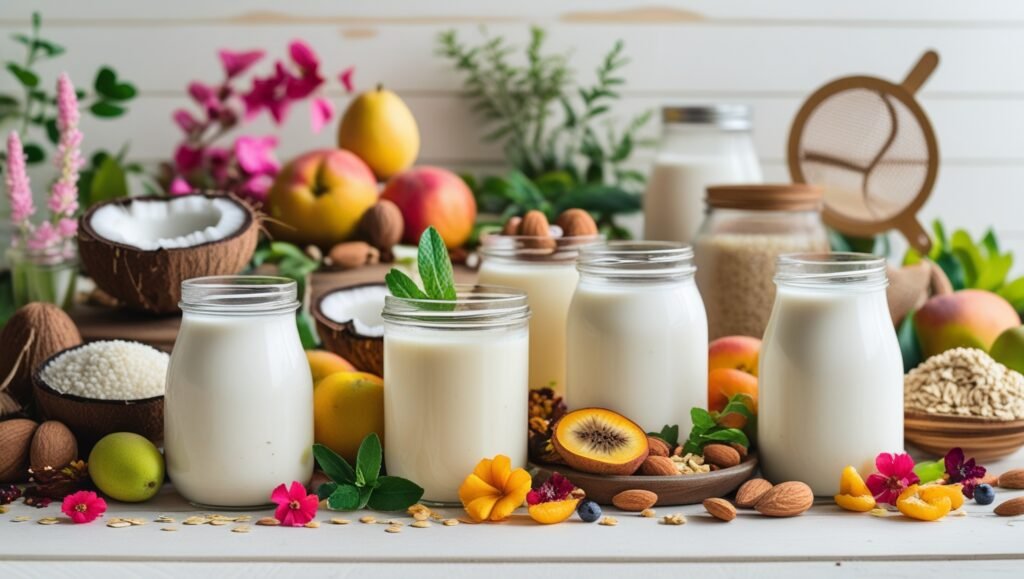
Plant Based Milk Kefir: The Gut-Healthy Secret for Dairy-Free Living, (Non-Dairy Options) → How to make kefir with Coconut, Almond & Oat Milk – and which works best– Benefits, Recipe & Best Option Revealed
A Story from the Kitchen…It all started with a bloated belly and a half-empty fridge. Arjun, a lactose-intolerant food blogger from Bengaluru, had just finished his fourth failed attempt at digesting store-bought almond yogurt. Frustrated, he stumbled across something ancient and curious—milk kefir, a probiotic-rich fermented drink. But it was made with cow’s milk, which was off-limits for him.
That’s when the idea hit: “Can I make kefir with coconut milk? Almond milk? Even oat milk?”
This led to a month-long kitchen experiment—and today, we’re breaking down exactly what he discovered (with some science-backed facts and health benefits you won’t find in every blog).
What Is Plant-Based Milk Kefir?
Plant-based kefir is a non-dairy fermented drink made by culturing plant milks (like coconut, almond, or oat) with milk kefir grains or non-dairy starter cultures.
Unlike dairy kefir, which naturally contains lactose for microbes to feed on, plant milks may need a little help (like added sugars or nutrients) to fuel fermentation.
Health Benefits of Plant-Based Kefir
According to multiple studies, plant-based kefir offers benefits such as:
-
Improved Gut Health: Fermented non-dairy kefir still contains multiple strains of live bacteria and yeast. Source: NIH, 2020
-
Reduced Anxiety & Better Sleep: Kefir promotes GABA production in the brain, which reduces stress. Source: Frontiers in Psychiatry, 2021
-
Anti-inflammatory Effects: Non-dairy kefir contains bioactive peptides that may reduce systemic inflammation.
-
Dairy-Free Probiotic Source: Suitable for people with lactose intolerance or dairy allergies.
What You’ll Need
| Ingredient | Quantity |
|---|---|
| Plant Milk (see below) | 250–500 ml |
| Milk Kefir Grains | 1–2 tablespoons |
| Optional: cane sugar | 1 tsp (for almond/oat) |
| Glass jar with lid | 1 |
| Wooden or plastic spoon | 1 |
Best Plant Milks for Kefir: Ranked by Results
1. Coconut Milk Kefir (Thick & Tangy)
-
Fermentation Time: 24–36 hours
-
Texture: Creamy, slightly oily
-
Flavor: Tropical tang with mild sweetness
-
Tips: Use full-fat canned coconut milk. Stir gently before fermenting. No extra sugar needed.
Works best among plant milks. High in medium-chain triglycerides (MCTs), which aid gut and brain health.
2. Almond Milk Kefir (Nutty & Smooth)
-
Fermentation Time: 24–30 hours
-
Texture: Thin, silky
-
Flavor: Subtly nutty and mildly sour
-
Tips: Add 1 tsp cane sugar to feed the kefir grains. Use unsweetened, additive-free almond milk.
Needs nutrient boosting to keep grains healthy over time. Rotate with dairy milk or rest grains weekly.
3. Oat Milk Kefir (Neutral & Fibrous)
-
Fermentation Time: 24 hours
-
Texture: Thicker, slimier (beta-glucan content)
-
Flavor: Mildly sweet, neutral
-
Tips: Strain well. Add sugar before fermenting. May require additional straining.
Can clog kefir grains over time due to starch. Good for short-term use.
Step-by-Step: How to Make Plant-Based Kefir
-
Sanitize Your Jar
Rinse with hot water or vinegar. No soap. -
Add Plant Milk
Pour 250–500 ml into the jar. -
Add Kefir Grains
Add 1–2 tbsp of active milk kefir grains. -
Optional: Add Sugar
Especially for almond or oat milk (1 tsp helps fermentation). -
Ferment
Cover the jar with a breathable cloth or loose lid. Leave at room temperature (20–30°C) for 24–36 hours. -
Strain & Store
Use a plastic/nylon strainer. Store kefir in the fridge and reuse grains in a fresh batch.
Coconut vs Almond vs Oat Milk Kefir: Comparison Table
| Feature | Coconut Milk | Almond Milk | Oat Milk |
|---|---|---|---|
| Creaminess | ⭐⭐⭐⭐☆ | ⭐⭐☆☆☆ | ⭐⭐⭐☆☆ |
| Fermentation Power | ⭐⭐⭐⭐☆ | ⭐⭐☆☆☆ | ⭐⭐⭐⭐☆ |
| Taste | Rich & tropical | Nutty & light | Smooth & sweet |
| Gut Health Boost | Excellent | Good | Excellent |
| Best For | Energy, Skin | Low-cal diets | Digestion, Mood |
Unique Tips Most Blogs Don’t Mention
-
“Starve Mode” Myth: Kefir grains don’t die instantly in plant milk. But they do slow down. Rotate back to dairy milk or rest grains in milk once a week to revive them.
-
Re-culture Like a Pro: Use the first batch as a ‘conditioning batch’—it may not taste great, but the second or third batch gets stronger.
-
Natural Flavors: Add cinnamon, vanilla extract, or dates during fermentation to enhance flavor and increase microbe activity.
Bonus: Who Should Drink Plant-Based Kefir?
-
Vegans looking for probiotics
-
People healing leaky gut or IBS
-
Hormone-balancing diets (kefir helps liver detox)
-
Anyone struggling with sleep or mood issues
-
Kids with dairy allergies (after pediatrician advice)
Final Thoughts
Arjun’s almond milk kefir didn’t turn out perfect the first time—but after a few batches and a lot of taste-testing, he found coconut milk kefir worked best for him. He now drinks it daily—and his bloating is history.
You don’t have to give up probiotics if you’re dairy-free. You just need to ferment smart.
Related Posts:
-
Which Kefir is Best for Diabetic Patients? Milk Kefir or Water Kefir?
- Kefir vs. Yogurt: Which One Is Better for Gut Health?
- Is Milk Kefir Good for Your Skin Health?
Note: Don’t purchase kefir drink from market, because they are using chemicals and preservatives to increase shelf life—just like soft drinks—which are not good for your body. If you want a healthy kefir drink, you must make it at home. For that, you can purchase pure organic milk and water kefir grains from us—with free shipping and the lowest price.
Ready to Start Fermenting?
Order fresh, organic kefir grains with free shipping all over India from
👉 JPS Ayurvedic Pharmacy
📱 WhatsApp: +91-9877194003 | +91-9646088764
📢 Follow us:
